• Skip to primary navigation
  • Skip to main content
A-Level H2 Maths

A-Level H2 Maths

Step-by-Step for Better Maths Results!

  • About
  • 9758 H2 Maths Resources

Integration Techniques

Integration Application: Area of Rectangles and Area under the Curve

This is a common type of question which involves using rectangles of equal width to estimate the area under the curve. There are two ways to draw the rectangles. One way will give you an underestimate of the exact area while the other way will give you an overestimate. In this question, both ways are explored and we zoom in on the approach of how to prove the total area of n number of rectangles is expressed in summation form.

Filed Under: 9740 Syllabus, 9758 Syllabus, Integration Application Area, Integration Techniques Tagged With: Area, Summation

Differential Equation Definitions & Problem

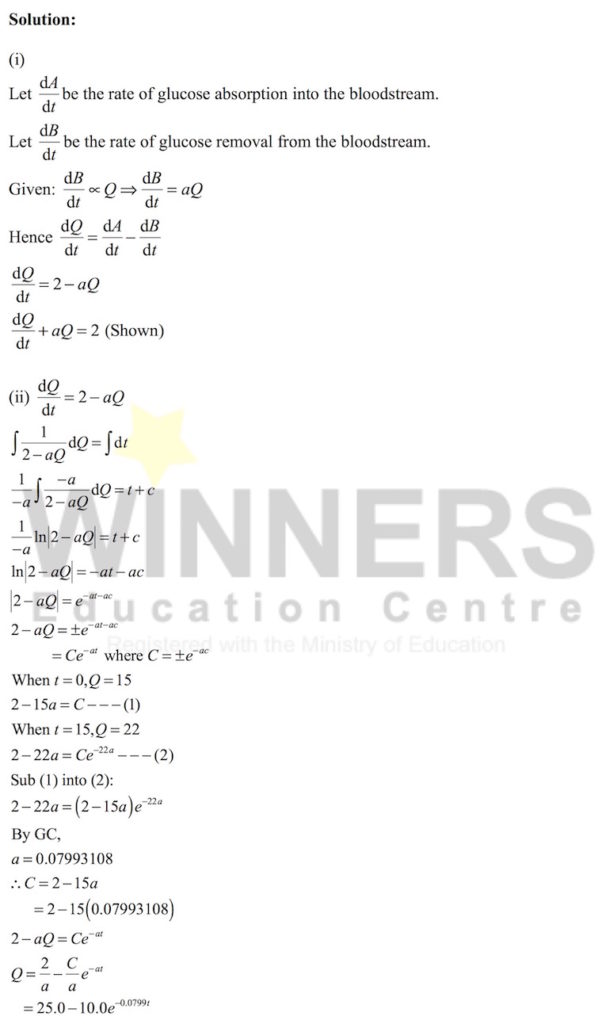
The main challenge in Differential Equation is formulating a differential equation from a problem situation and deriving its solution. It requires basic integration techniques as shown in the following question.


Filed Under: 9740 Syllabus, 9758 Syllabus, Differential Equations, Integration Techniques

Integration by Parts Formula Derivation & Examples

When students start learning Integration by Parts, they might not be able to remember the formula well. In fact, you do not need to rote memorise if you know that Integration by Parts can be derived in seconds from Differentiation Product Rule and I highly recommend you to do so via Product Rule until it comes to you naturally.

In this post, I show you the step by step to derive your Integration by Parts formula and examples to apply it.


Filed Under: 9740 Syllabus, 9758 Syllabus, Integration Techniques, Summary & Examples Tagged With: LIATE, Product Rule

Integration Application: Volume

In this question, some students might face two challenges:

  1. How to find the volume of the shaded region
  2. How to apply the correct integration techniques (Click here for summary & examples) when we need to integrate trigonometric functions in product form and raised to certain powers like in this question

I will classify this question as a basic level and I hope you have learnt something new if you are not able to complete this question correctly.

Filed Under: 9740 Syllabus, 9758 Syllabus, Integration Application Volume, Integration Techniques Tagged With: Volume

Integration Involving Modulus Function

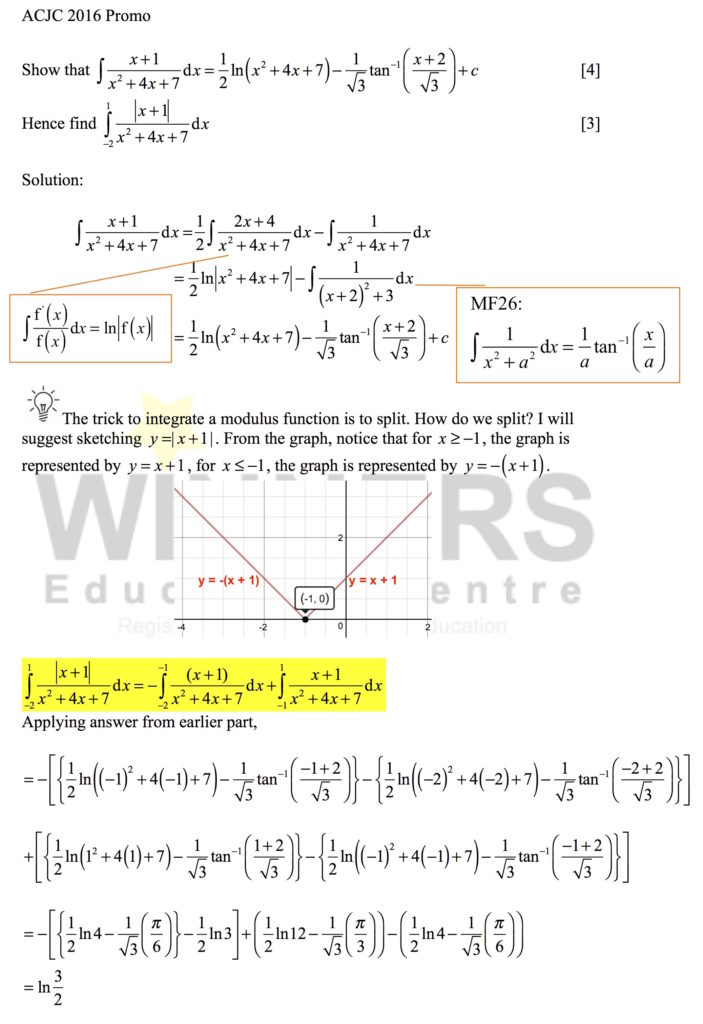
In this question, we look at the application of integration techniques, particularly on how to integrate a modulus function. The strategy I use in this question is known as Splitting. For you to be able to split correctly, I would suggest sketching the modulus graph so that you know the correct equation to represent each portion of the modulus graph.

modulus-integration

Filed Under: 9740 Syllabus, 9758 Syllabus, Integration Techniques Tagged With: Modulus

Cover Up Rule for Partial Fractions

In MF15 and MF26, we are given the partial fractions decomposition for

  • Non-repeated linear factors
  • Repeated linear factors
  • Non-repeated quadratic factor

It is useful to work with partial fractions especially when we do integration.

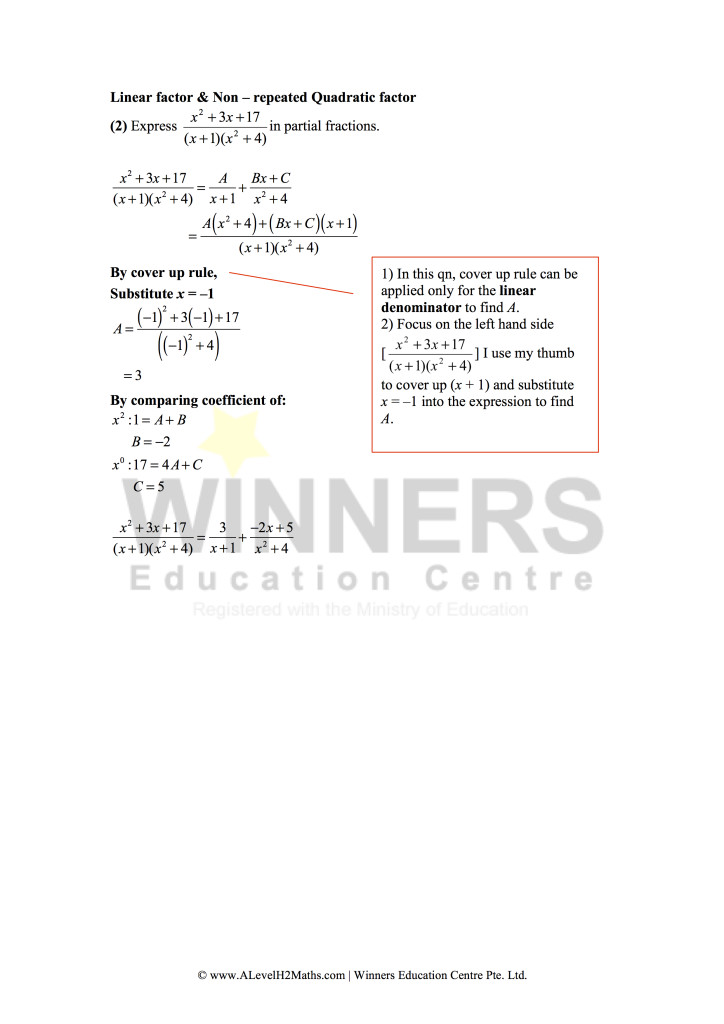
I have given 3 examples on how and when we use cover up rule (CUR). It acts like a shortcut to comparing coefficients. However, please note when CUR works and when we have to stick to our old good method of comparing coefficients.


Cover up Rule 1

Cover up Rule 2

Cover up Rule 3


Filed Under: 9740 Syllabus, 9758 Syllabus, Integration Techniques, O-Level Additional Maths, Partial Fractions, Summary & Examples Tagged With: Cover up rule

  • Go to page 1
  • Go to page 2
  • Go to Next Page »

Copyright © 2023 · ALevelH2Maths.com